

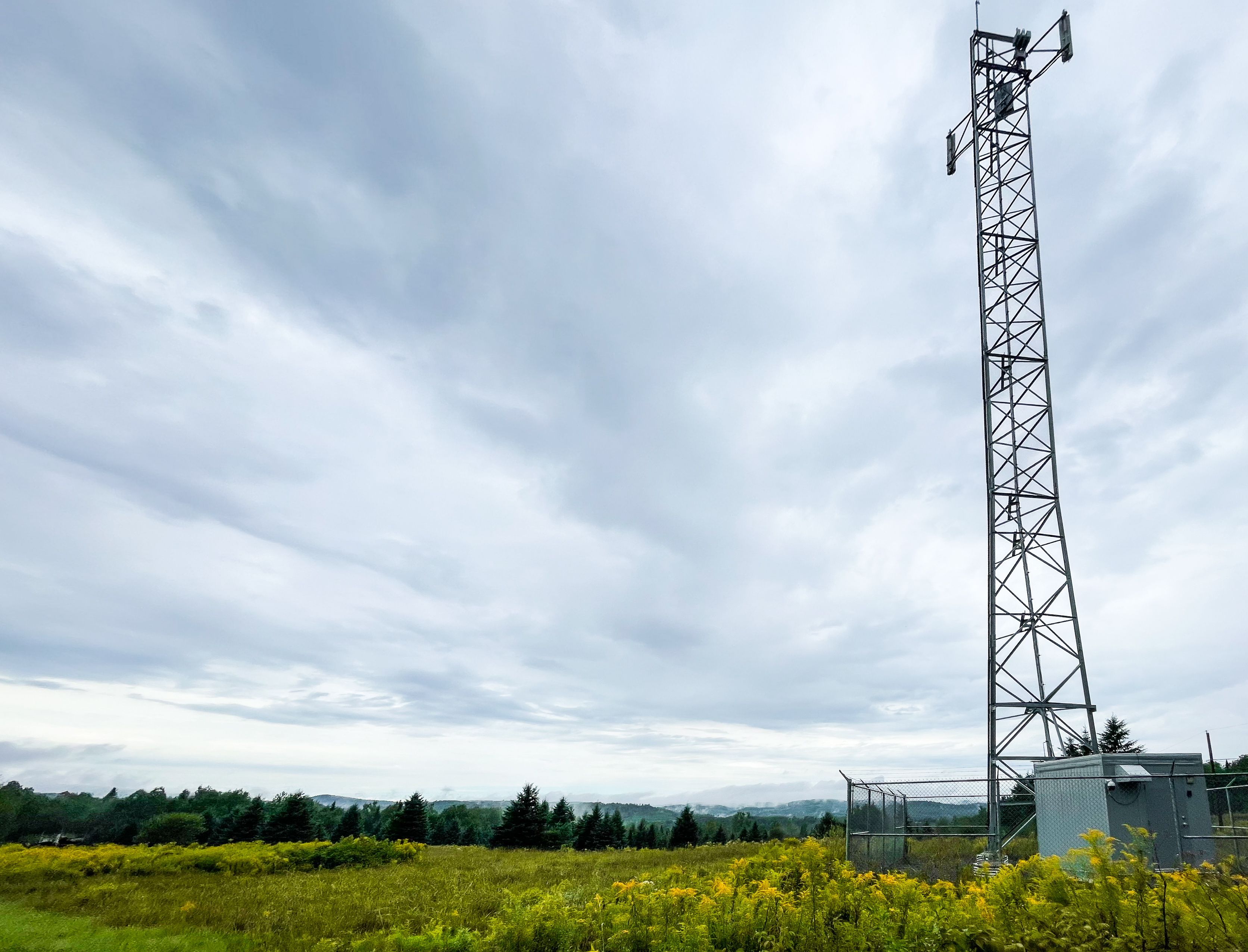
Deployment of Cell Phone Service in Haute-Mauricie
The Haute-Mauricie Cellular Project aims to expand cellular network coverage to previously unserved areas, directly improving safety and mobility. It transforms the daily lives of residents and visitors by providing essential access to communications. This represents a major step forward for the region’s development and appeal.
Implementing cellular coverage in Haute-Mauricie
The Haute-Mauricie Cellular Project aims to deploy a public mobile phone network in one of Quebec’s most isolated regions to improve safety, mobility, and quality of life for visitors and residents.
Funded by the Government of Quebec and carried out by Ambra Telecom (formerly known as ECOTEL), this project extends cellular coverage in the Haut-Saint-Maurice and La Tuque regions, where many areas previously lacked cellular connectivity.
Mobile services for residents are provided in collaboration with Videotron, which uses the deployed infrastructure to expand its network in the region.
This initiative constitutes the second phase of connectivity improvements in Haute-Mauricie, complementing the infrastructure deployed as part of the LTE Haute-Mauricie project.
An initiative supported by the Government of Quebec
The Haute-Mauricie Cellular Project is part of the Quebec government’s investments aimed at improving cellular coverage in rural and remote areas.
As part of Phase 2 of the mobile coverage improvement program announced in the 2024–2025 budget, 11 new cellular sites are planned in the Laviolette–Saint-Maurice riding, specifically in the following areas:
- Trois-Rives
- Lac Normand
- La Tuque
- La Croche area
- Lac-Édouard
This infrastructure will help improve safety for residents and visitors, particularly along several major roads where mobile coverage was previously nonexistent or limited.
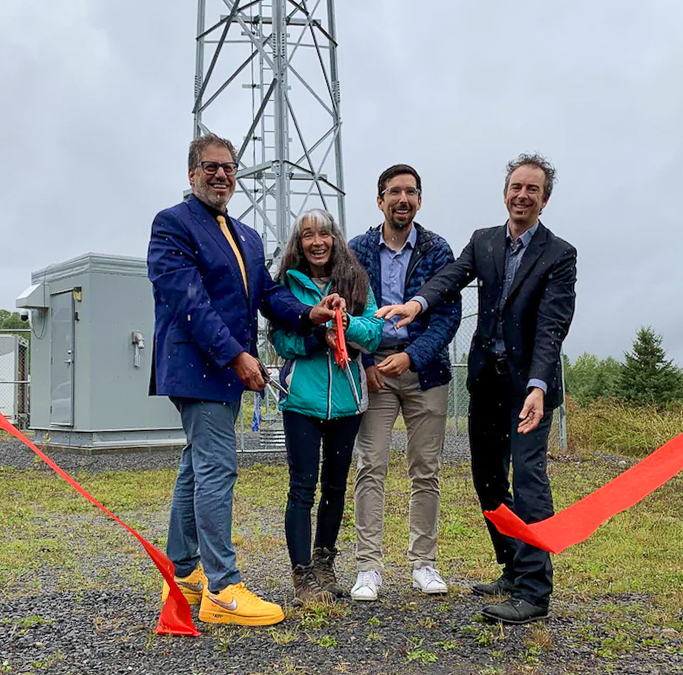
Project Highlights
The Haute-Mauricie Cellular project builds directly on the infrastructure constructed by Ambra Telecom as part of the Haute-Mauricie LTE project.
During that initial project, the telecommunications towers were designed and built to eventually accommodate cellular connectivity, even though the original mandate focused solely on wireless high-speed Internet.
This approach made it possible to:
- reduce mobile network deployment costs
- accelerate the rollout of cellular coverage
- limit the construction of new infrastructure
As a result, 9 existing sites were converted to accommodate cellular equipment, while two new towers will be built in the La Croche area to complete coverage of the region.
The new cellular network covers several communities and major roads in the Haute-Mauricie region, including:
- Saint-Joseph-de-Mékinac
- Trois-Rives
- Parent
- Lac-Édouard
- the surrounding areas of Haut-Saint-Maurice
Connected to over 500 km of fiber-optic cable, this infrastructure now allows more than 10,000 residents, workers, and visitors to benefit from reliable mobile coverage.
As soon as the network goes live, emergency calls can be made from any mobile device, regardless of the provider, significantly improving safety in the region.
Beyond everyday communications, the presence of a reliable cellular network tangibly transforms the lives of residents and visitors to the region.
The Haute-Mauricie Cellular Project contributes in particular to:
- improve safety while traveling on regional roads, or even outside of homes
- facilitate emergency response
- support the local economy and tourism activities
- enhance communications for workers and residents in remote areas
By bringing communities up to the same level of connectivity as major urban centers, this project helps break down digital isolation and support the vitality of the Haut-Saint-Maurice region.
Videotron uses the infrastructure deployed by Ambra Telecom to offer mobile phone services to individuals in the region.
Thanks to this partnership, residents and vacationers in the Haute-Mauricie region can now access modern, reliable, and competitive mobile phone services comparable to those available in major urban centers.
Vidéotron’s sister brand, Fizz, will also be able to use this infrastructure to expand its network coverage.